
Introduction
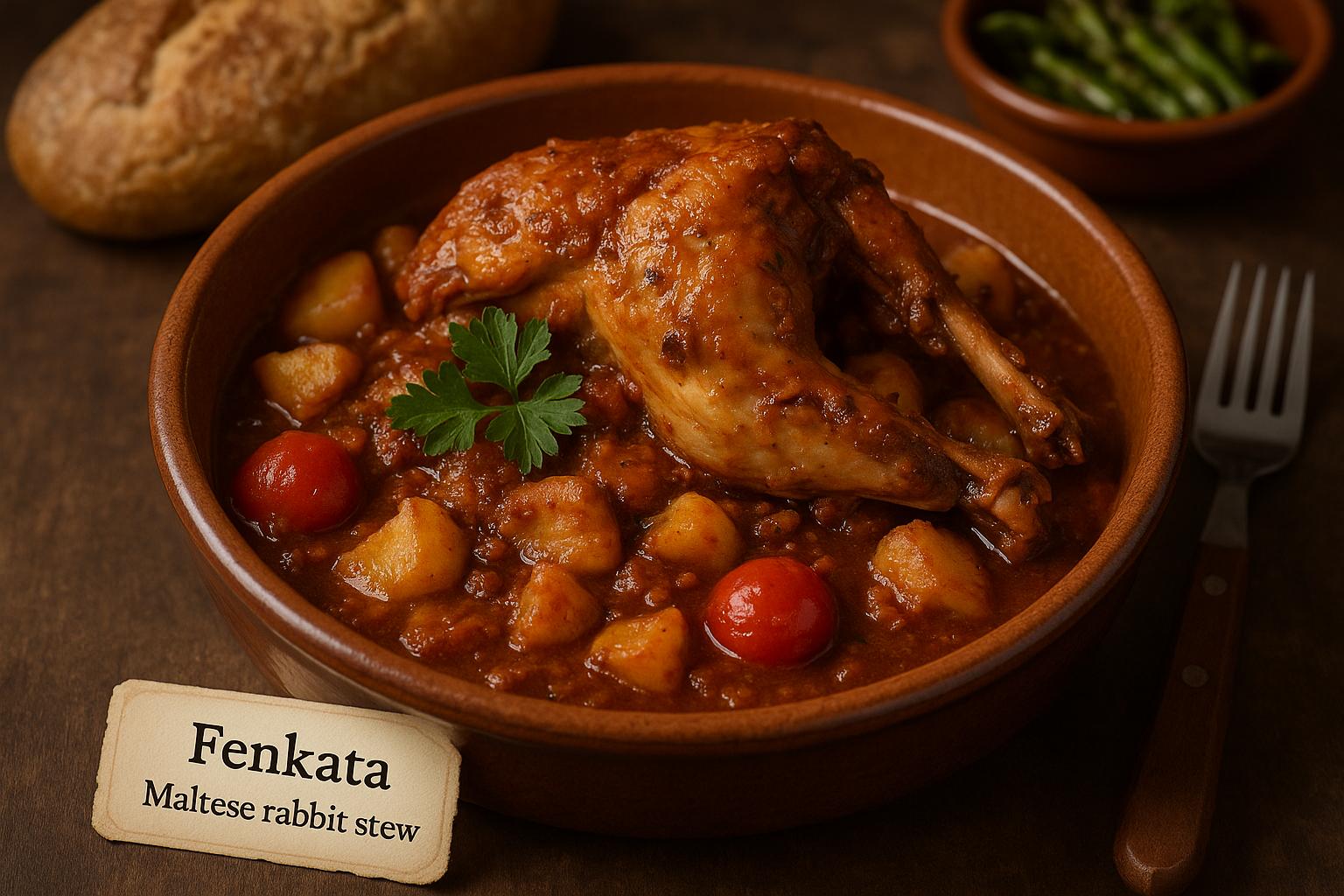
Maltese rabbit stew, locally known as Fenkata, holds a venerable place in the pantheon of Malta’s culinary delights. This robust and hearty stew is not just a dish; it is a cultural emblem, redolent of Malta’s distinctive blend of local produce infused with Mediterranean influences. As such, Fenkata is much more than a meal—it is an experience rooted deeply in tradition, often celebrated as a communal gathering meant to foster connections among friends and family. Over the years, it has consistently been a dish that resonates with historical relevance and cultural depth, reflective of the vibrant spirit of Malta itself.
Historical Background
The origins of rabbit farming in Malta can be traced back to the historical period of the Knights of St. John, an era that significantly shaped the island’s culinary and agricultural practices. During this time, rabbit was a delicacy reserved primarily for the knights and their attendants, embodying both luxury and scarcity. Gradually, it transitioned beyond the confines of exclusivity, becoming accessible to the broader Maltese population. This democratization of rabbit meat marked the beginning of Fenkata as a beloved national dish, primarily reserved for celebratory occasions and family gatherings. In essence, the evolution of Fenkata mirrors Malta’s broader socio-economic and cultural transitions, moving from a rigidly class-based society to a more community-centric one where tradition and modernity blend harmoniously.
Ingredients
Central to the preparation of Fenkata, the rabbit serves as the star ingredient, bringing a unique flavor profile that is both rich and earthy. The inclusion of a variety of vegetables and herbs complements this main element, creating a complex, layered taste that is quintessential to the stew. Key ingredients typically encompass tomatoes, which add a subtle acidity and natural sweetness, along with onions and garlic that introduce a depth of flavor. Additionally, hearty potatoes are often incorporated, providing texture and moisture to the dish. The careful selection of seasonings such as bay leaves and freshly ground pepper introduces an aromatic complexity, while a good quality wine contributes a hint of acidity, enrichening the overall depth and enhancing the succulent nature of the rabbit.
Preparation Method
The preparation of Fenkata is an exercise in patience and skill, with slow cooking being an essential component to achieve the desired taste and texture. The rabbit is first expertly marinated in wine and a selection of aromatic herbs, a step that allows the meat to absorb a full array of flavors. Once marinated, the rabbit is slow-cooked in a tomato-based sauce—a process that can take several hours. This simmering not only tenderizes the meat, resulting in a sumptuous texture but also allows the various flavors to meld, producing a stew that is rich and flavorful. The final product is then commonly served with either crusty bread or pasta, both of which act as ideal mediums to soak up the savory broth, transforming the dish into a satisfying and filling meal.
Serving Suggestions
Fenkata is traditionally enjoyed in a communal atmosphere, a characteristic feature that reflects the Maltese culture’s emphasis on family and conviviality. Sharing a pot of Fenkata fosters camaraderie and offers a genuine Maltese dining experience. To elevate the experience, the stew can be expertly paired with robust red wines, which effectively complement the hearty and complex flavors inherent in the dish. For those looking to indulge in a full Maltese dining experience, supplement your main course with iconic local side dishes and desserts. A perfect choice might be Ġbejniet, a type of traditional Maltese cheese that adds a hint of saltiness to balance out the meal, or Imqaret, delightful date-filled pastries that provide a sweet conclusion to the culinary adventure.
For those interested in delving deeper into the Maltese culinary world, I suggest exploring further resources dedicated to Maltese cuisine. You can find a trove of inspiring recipes, insightful articles, and more about dining traditions in Malta by visiting this link. Through such exploration, one can appreciate the culinary stories that span centuries, reflecting Malta’s history and its contemporary culture. In doing so, an appreciation for Maltese cuisine becomes as deeply ingrained as the flavors of Fenkata itself.