St. George’s Basilica, Victoria (Gozo)

Overview of St. George’s Basilica, Victoria (Gozo)

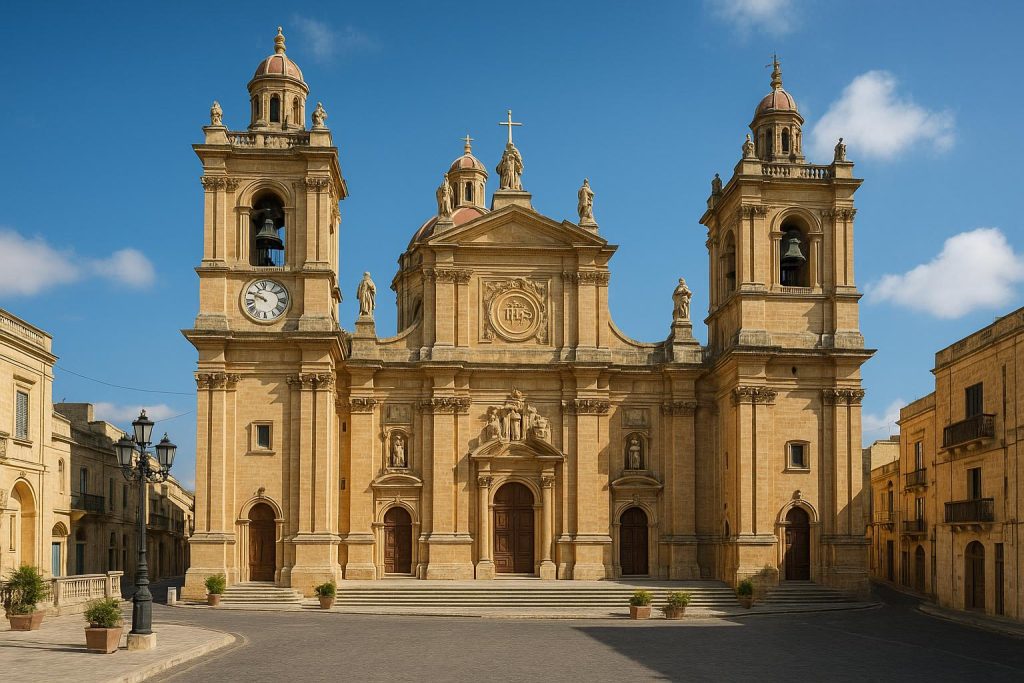
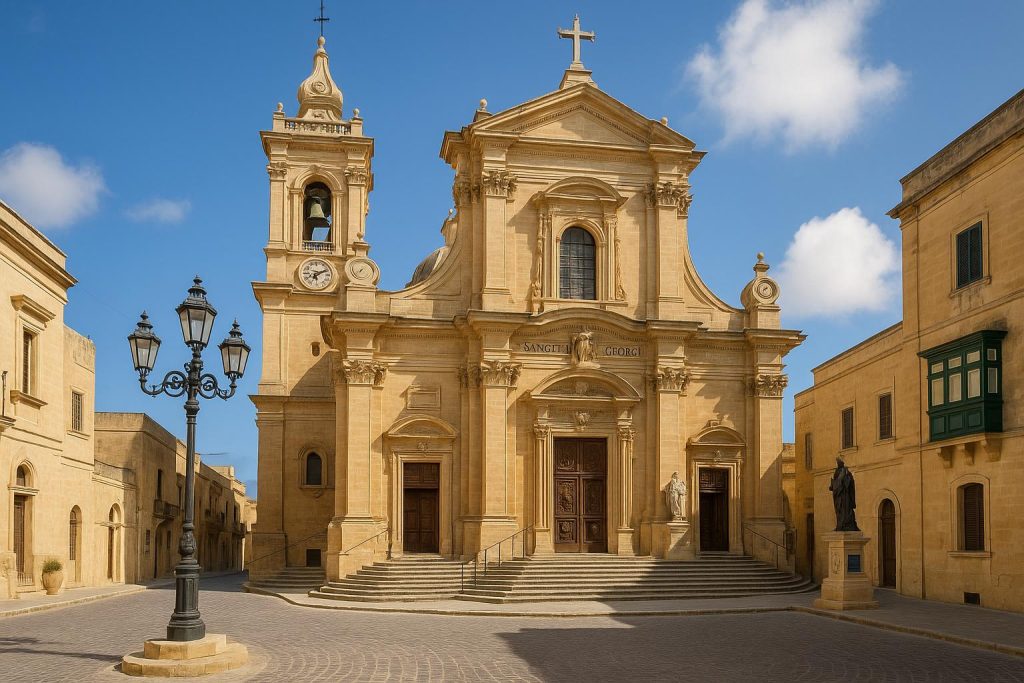
St. George’s Basilica, located in Victoria on the island of Gozo, Malta, is a site of historical and architectural significance. This Roman Catholic basilica stands at the heart of Victoria, also referred to as Rabat, and is a notable landmark on the island.

Historical Significance

The origins of the basilica can be traced back to the 17th century. Originally built in 1672, the basilica was later consecrated in 1755. It is dedicated to St. George, who is revered as the patron saint of Gozo. Over the years, the basilica has undergone various restorations and expansions, preserving its historical essence while adapting to contemporary needs.

The basilica’s historical backdrop reflects the cultural and religious transitions in Gozo. Its initial construction coincided with a period of significant development in Maltese architecture, influenced by the prevailing artistic movements of the time. The process of consecration, which took place 83 years after its initial construction, marked a pivotal moment in the basilica’s history, signifying its importance as a religious center on the island.

Architectural Features

St. George’s Basilica is characterized by its Baroque architectural style. The façade is ornate, featuring intricate carvings and sculptures that reflect the artistry of the period. The interior is equally impressive, with a richly decorated dome and numerous frescoes and paintings that adorn the walls and ceilings. The marble flooring adds to the grandeur of the basilica, while the numerous altars further highlight its sacred purpose.

The Baroque style is evident not only in the overall structure but also in the detail and decoration found throughout the basilica. This style, known for its elaborate ornamentation and dynamic forms, can be observed in the symmetrical arrangement and the use of light and shadow to create depth and drama. The dome, a focal architectural element, stands as a testament to the era’s engineering prowess, with its elaborate frescoes depicting biblical narratives and scenes of religious significance.

Art and Relics

Inside the basilica, visitors can find several important pieces of art and religious relics. The main altar is a focal point, constructed with elaborate designs and featuring a statue of St. George. The basilica also houses several significant paintings, some of which are attributed to well-known local artists. The collection of relics, which includes items of religious importance, offers insights into the basilica’s rich heritage.

Art plays a crucial role in the basilica’s identity. The paintings, with their vivid colors and detailed scenes, serve not only as decorative elements but also as visual narratives conveying biblical stories and teachings. The relics, preserved and displayed with great care, enhance the spiritual and historical ambiance of the basilica. Items such as chalices, ceremonial vestments, and historical documents form part of this collection, each with its own story connected to the religious history of Gozo.

Community and Religious Life

St. George’s Basilica serves as a center for the local community in Gozo. It hosts numerous religious ceremonies, festivals, and events throughout the year. The annual feast dedicated to St. George is one of the significant events celebrated with fervor, attracting both locals and tourists.

The basilica functions not only as a place of worship but also as a community hub where people gather for various occasions. Its role extends beyond religious functions, contributing to the social fabric of the local community. Events ranging from weddings to baptisms and educational workshops to charity events are regularly scheduled, reflecting the basilica’s integration into daily life in Victoria.

For further information on visiting hours, events, and history, it is advised to check the official website of St. George’s Basilica.

This historical and architectural marvel continues to stand as a symbol of the island’s rich cultural heritage, drawing visitors with its stunning visuals and rich array of events that offer a deeper understanding of its significance in Maltese society. Through its impressive architectural details and vibrant community events, St. George’s Basilica remains a testament to the enduring legacy of faith and tradition in Gozo.

Ta’ Ġieżu Church, Valletta

The Historical Significance of Ta’ Ġieżu Church in Valletta

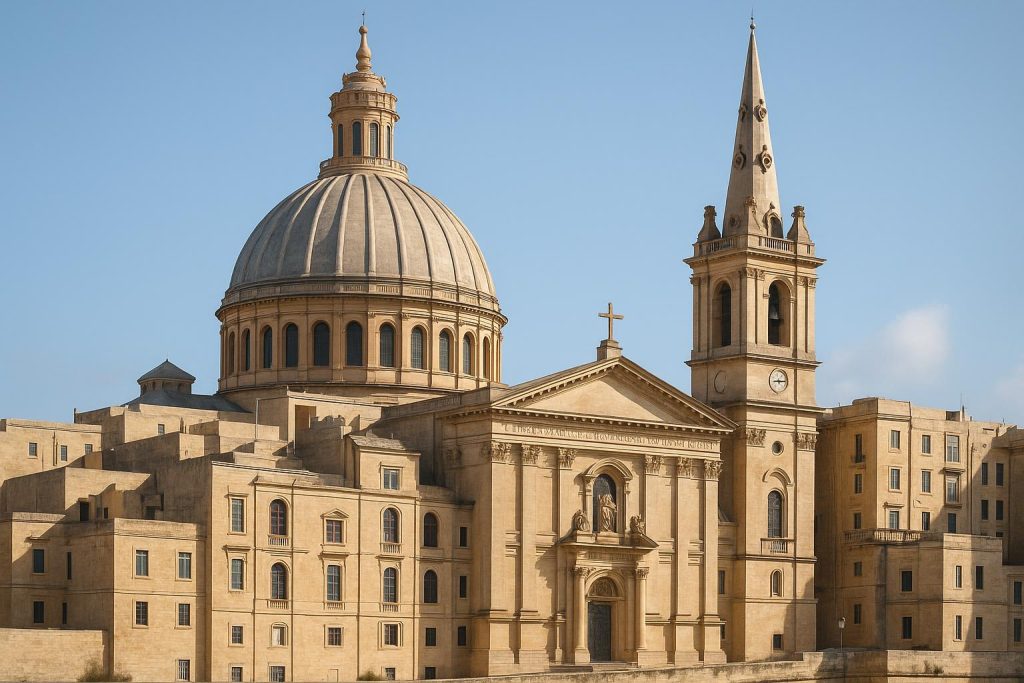
Ta’ Ġieżu Church, formally known as the Church of the Crucifix, is an important religious site located in the heart of Valletta, Malta. The Church is one of the oldest examples of religious architecture in the city and holds a rich history significant to both the cultural and spiritual development of the island.

Architectural Features

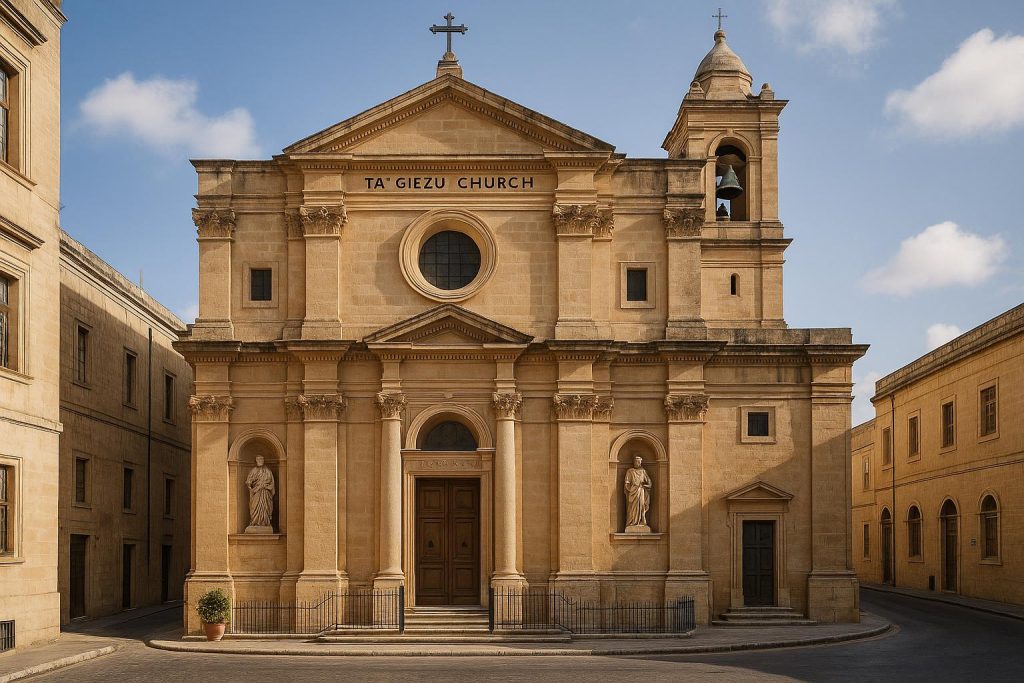
The church was originally constructed in the mid-16th century, around 1571, and has undergone numerous modifications and restorations since then. Its façade is relatively simple, resonating with the architectural style of its era. However, the interior is known for its ornate Baroque decorations added later in the 17th century. Of particular note is the intricately adorned ceiling and the lavish marble flooring.

The architectural grandeur of Ta’ Ġieżu Church in Valletta not only epitomizes the aesthetic values of its time, but it also serves as a testament to the changing dynamics of architectural trends in Malta over the centuries. While its exterior design maintains a modest simplicity, reflecting the functional purpose of religious structures of that era, the interior reveals a different story. The decoration of the church’s interior during the 17th century marks an embrace of the Baroque style, characterized by dramatic use of light and shadow, opulent details, and a sense of grandeur that was intended to evoke emotional responses from worshippers.

The ceiling of Ta’ Ġieżu Church is one of its most captivating features. The intricate designs and artworks adorning the ceiling are reflective of the artistic movements that influenced Malta during the Baroque period. This ornate work serves not just as artistic expression but also as a means of storytelling, with religious themes depicted through artistry. Visitors would find their gaze drawn upward to the elaborate patterns and religious iconography that fill the ceiling space.

Similarly, the marble flooring in the church contributes to the overall sense of magnificence and reverence. This marble, sourced locally as well as from international locations, showcases intricate craftsmanship and gives the church a resplendent aura. Walking across the floor, visitors can appreciate both the artistry and the historical significance of the materials and techniques employed.

Crucial Artifacts and Icons

Within Ta’ Ġieżu Church is a revered life-sized wood sculpture of Christ, accompanied by various other religious icons that are integral to the Maltese Catholic tradition. The sculpture is noted for its emotive depiction and is the center of several religious ceremonies throughout the liturgical year.

The sculpture itself is an impressive example of religious art and craftsmanship. Carved with meticulous attention to detail, this life-sized representation of Christ is emotionally powerful, capturing the devoutness and spirituality that the church embodies. The sculpture is a focal point within the church and plays a central role in numerous religious observances and festivals. It offers both residents and visitors a tangible connection to the rich tapestry of faith that runs through Maltese history.

Besides the sculpture, Ta’ Ġieżu Church houses a variety of religious icons and artifacts that are cherished by the local community. These artifacts are not merely decorative but serve as important spiritual and cultural links to the past. Many are used in religious processions and hold particular significance during key liturgical events, making them essential to the Catholic practices on the island.

Franciscan Conventual Church

Currently, Ta’ Ġieżu Church serves as a Franciscan Conventual Church. The Franciscans have maintained an active presence and continue to support the community with various philanthropic endeavors. Their stewardship has ensured that the church is not only a place of worship but also a community hub.

The role of the Franciscans at Ta’ Ġieżu Church extends beyond spiritual guidance. They have cultivated an environment where the church acts as a center for community interaction and support. This includes a commitment to social welfare and education, mirroring the values of charity and service central to the Franciscan order. Their activities often extend outwards into the community, enhancing the church’s role as a catalyst for social change and cultural enrichment.

Moreover, the Franciscan presence ensures the maintenance and preservation of the church’s historical assets. By actively engaging in the preservation of both the structure and its associated artifacts, the Franciscans play a critical role in safeguarding Malta’s religious and cultural legacy. Their efforts ensure that future generations will be able to experience and learn from this historically rich site.

Conclusion

Ta’ Ġieżu Church remains one of Valletta’s most treasured religious landmarks, offering insights into the architectural, historical, and religious evolution of Malta. For those interested in exploring Maltese culture and heritage, visiting this site can be an enriching experience.

The church stands not only as a monument of religious significance but also as a symbol of the rich historical tapestry that defines Malta. Its blend of architectural styles and dedication to religious art offers a window into the past, while the active role of the Franciscans ensures it remains a vibrant part of the community today.

Visitors to Ta’ Ġieżu Church can expect to embark on a journey through time, witnessing firsthand the legacy of religious devotion that has shaped Malta’s history. From the awe-inspiring Baroque details to the solemn beauty of the wood sculpture of Christ, the church provides a setting that encourages reflection and appreciation of the island’s cultural heritage.

For those planning to explore this landmark, more detailed information can be accessed through local tourist resources online and official Valletta tourism websites, which provide guidance on visiting hours and tour availability. These resources ensure that everyone can appreciate what Ta’ Ġieżu Church has to offer, from its historical roots to its present-day significance as a cornerstone of Malta’s cultural and spiritual landscape.

St. Agatha’s Catacombs, Rabat

Overview of St. Agatha’s Catacombs

St. Agatha’s Catacombs, located in the historic town of Rabat, Malta, represent an enthralling network of underground burial sites that trace their origins back to the early Christian era. These ancient catacombs are an integral part of Malta’s rich cultural and religious tapestry, offering an immersive view into the burial customs of the early Christians as well as the historical milieu of the island. The site stands as a testament to Malta’s deep-seated religious tradition and its evolution across the centuries.

Historical Significance

The catacombs are believed to have been active since at least the 3rd century AD. This period was marked by significant religious transformation and turmoil, reflecting the broader contours of history during the early days of Christianity. Tradition holds that St. Agatha, a revered Christian martyr known for her devotion and resilience, sought refuge within these underground passages to escape Roman persecution. Her association with these catacombs highlights the catacombs’ use as a sanctuary during times of religious persecution and civil strife. This attribute significantly elevates their importance as a historical monument within Malta, offering insights into the lives and challenges faced by early Christians on the island.

Architecture and Design

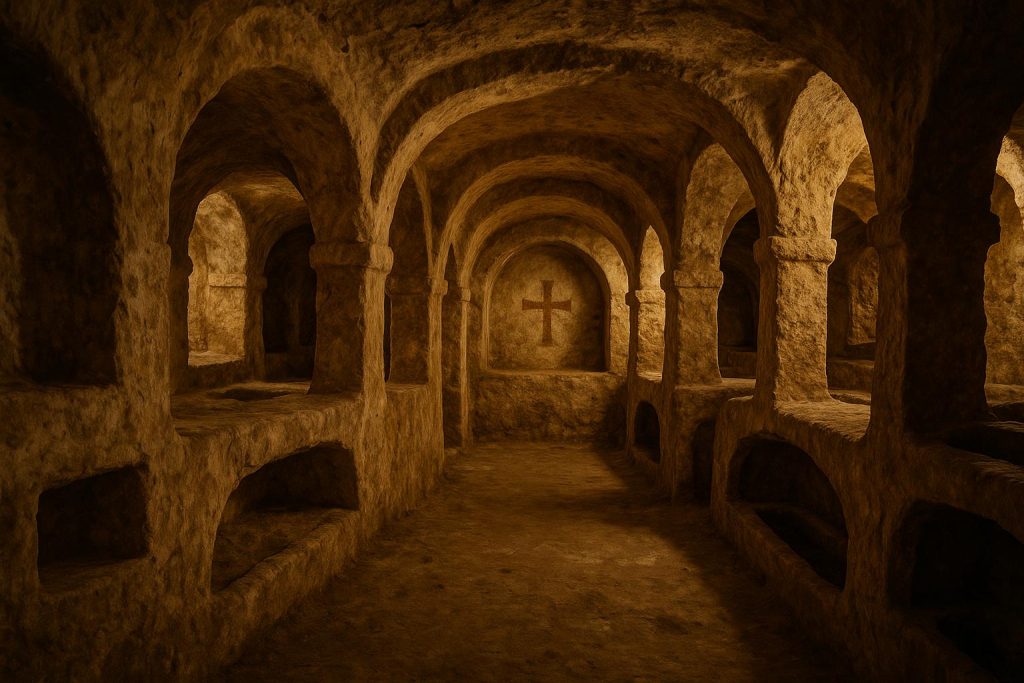
The architectural design of St. Agatha’s Catacombs showcases the resourcefulness and inventive capabilities of early Christian communities. Carved meticulously into the soft Maltese limestone, the catacombs comprise an intricate network of galleries and tombs. The soft yet durable nature of the limestone provided an ideal medium for construction and preservation. The walls are graced with faint frescoes, which although faded with time, provide invaluable insights into early Christian iconography. These frescoes serve as cultural artifacts reflecting artistic traditions and religious symbols of that era. The artwork ranges from simple decorations to intricate religious symbols, each conveying a story and offering a snapshot into the past religious sentiments and artistic expressions.

Structurally, the catacombs are a marvel of ancient engineering, with their ability to sustain historical continuity over centuries. The meticulous design involves not just individual tombs but also vast communal galleries, emphasizing the communal nature of early Christian societies. Each corridor and chamber tells a story of a community joined not only in life but also in death, illustrating the cultural and societal values that emphasized unity, family, and spiritual cohesion.

Exploring the Catacombs

Visitors embarking on a journey through St. Agatha’s Catacombs have the opportunity to navigate its winding paths and subterranean chambers. The exploration provides a visceral journey back in time, revealing how the catacomb’s design is interwoven with the communal burial practices of early Christians. As one delves deeper into the catacombs, the presence of family tombs becomes apparent, underscoring the cultural emphasis on family unity even in death—a poignant reminder of the societal values that prevailed among the early Christians.

Each chamber and passageway is more than a mere structural element; it represents the coming together of familial and social bonds. The arrangements within the catacombs often show families buried together, reflecting a collective approach to both life and death. This approach is demonstrative of early Christian beliefs about life after death, with the familial structure forming an integral part of their spiritual journey.

Preservation and Access

The preservation of these catacombs is of paramount importance, both as a religious site and as an archaeological treasure. There have been concerted efforts to maintain the integrity of the site and its historical artifacts. This involves the implementation of strategies to minimize damage caused by environmental exposure and human interaction. For those interested in exploring this historical site, the catacombs of St. Agatha are accessible through guided tours. Such tours are often led by knowledgeable guides who ensure that visitors gain meaningful insights into the site’s history while also respecting the sensitive nature of the ancient burial site.

These guided tours provide not just educational value but also regulatory oversight, ensuring that the site’s sanctity is respected. The management of visitor access through structured tours helps in maintaining the catacombs’ condition, safeguarding it for future generations to continue experiencing this remarkable piece of history. For additional information regarding visiting hours and tour details, potential visitors can consult the official site of the St. Paul’s Catacombs Heritage Malta. This provides an excellent resource for planning visits and ensuring a comprehensive understanding of the catacombs’ historical context.

Conclusion

St. Agatha’s Catacombs offer more than a mere glimpse into early Christian burial practices—they provide an encompassing narrative about Malta’s historical and cultural evolution. This quintessential landmark is pivotal not only from a religious perspective but also from an archaeological standpoint, continuing to attract scholars and tourists alike who are eager to delve into its ancient corridors and uncover the stories encapsulated within its walls.

As one of Malta’s most significant religious and historical sites, the catacombs of St. Agatha continue to function as a bridge connecting the past with the present. They offer modern-day visitors not merely a look into early Christian practices but also an invitation to understand the perseverance and resilience that have characterized Malta’s history. As such, the catacombs are not only a repository of past traditions but also an active participant in the dialogue surrounding cultural and historical identity, ensuring that the legacy of those who sought refuge and eternal rest within its chambers continues to resonate through the ages.

St. Paul’s Grotto, Rabat

Introduction to St. Paul’s Grotto

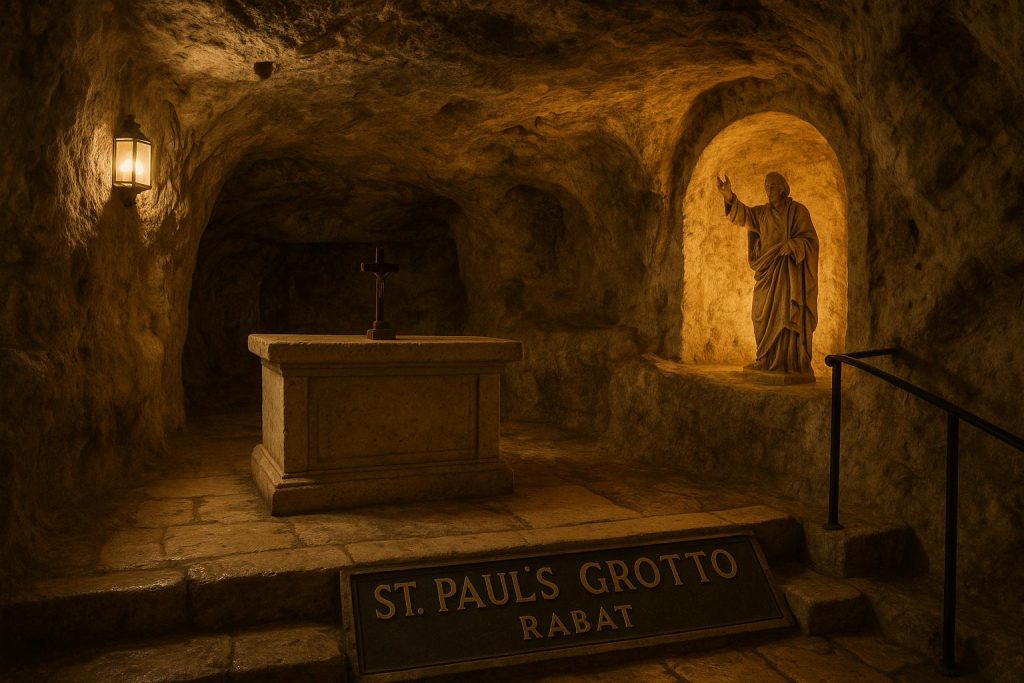
St. Paul’s Grotto, located in Rabat, Malta, is a renowned historical and religious site. It is widely believed that the grotto was the location where Saint Paul the Apostle took refuge after being shipwrecked on the island around 60 A.D. This site has since become a cherished destination for pilgrims and tourists alike, offering a blend of spiritual significance and archaeological interest.

Historical Significance

St. Paul’s Grotto holds great importance in Christian tradition as it marks the place where Saint Paul is said to have lived and preached during his stay in Malta. According to the Acts of the Apostles in the New Testament, Paul spent three months on the island, during which he spread the Christian faith among the islanders. The grotto thus represents a pivotal moment in the early history of Christianity in Malta.

The story of Saint Paul’s journey to Malta is closely linked with his role in spreading Christianity across the Roman Empire. His shipwreck and subsequent stay on the island mark a significant episode in his mission, highlighting his resilience and commitment to his faith. This journey forms a crucial part of the Christian narrative, particularly emphasizing the early dissemination of Christian teachings beyond Jerusalem and into Europe.

The Physical Site

The grotto itself is a subterranean cave, modestly sized but rich in history. Visitors can access the grotto through the Wignacourt Museum, which was built specifically to preserve and exhibit the artifacts related to this significant site. The interior of the grotto is characterized by its rough limestone walls and simple altars, making it a site of quiet contemplation.

Entering the grotto, one can observe the natural formations of limestone rock that have, over centuries, served as a backdrop to numerous religious activities. The rather unassuming nature of the grotto complements its historical gravitas, allowing visitors to focus on the essence of its significance rather than elaborate embellishments. The simplicity of the site encourages reflection and provides a tangible connection to the ancient past.

Religious Importance

For many believers, St. Paul’s Grotto is a place of pilgrimage. It is considered a sacred space where one might seek inspiration and spiritual renewal. Within the grotto, there is a small chapel where masses and religious ceremonies are occasionally held. The presence of St. Paul in Malta is celebrated annually on February 10th, marking the Feast of the Shipwreck of St. Paul, a public holiday on the island.

The religious importance of this site is not solely due to its association with Saint Paul, but also because it embodies the enduring presence of Christianity in Malta. The ceremonial events and the pilgrimage to the grotto underscore its ongoing relevance in contemporary faith practices. Believers often gather here to commemorate the profound impact of Saint Paul’s message and to reaffirm their faith.

Visiting Information

St. Paul’s Grotto is open to the public throughout the year. Visitors can access it via the Wignacourt Museum, which offers entrance to the grotto as part of its broader exhibit on Maltese cultural heritage. The museum provides various informative displays, detailing the historical and theological significance of St. Paul’s time on the island. It is recommended for visitors to check the opening hours before planning their visit, as they may vary seasonally.

Touring the grotto is not just a journey through a physical space, but an exploration of a narrative that has influenced countless generations. The museum’s exhibits enrich the visit by offering insights into the broader context of Maltese history and culture. Such displays bridge the gap between the present and the past, providing a more comprehensive understanding of the site’s significance.

In summary, St. Paul’s Grotto in Rabat offers a compelling journey through history and religion. Its preserved status allows modern-day individuals to connect with an era that shaped the religious landscape of Malta and continues to hold profound significance for the Christian community worldwide. Exploring this site offers a window into the past, encouraging visitors to reflect on the enduring influence of Saint Paul and the spread of Christianity in Europe. Whether one approaches it as a pilgrimage or a historical exploration, St. Paul’s Grotto remains a testament to the resilience of faith and the intricate tapestry of cultural history.