
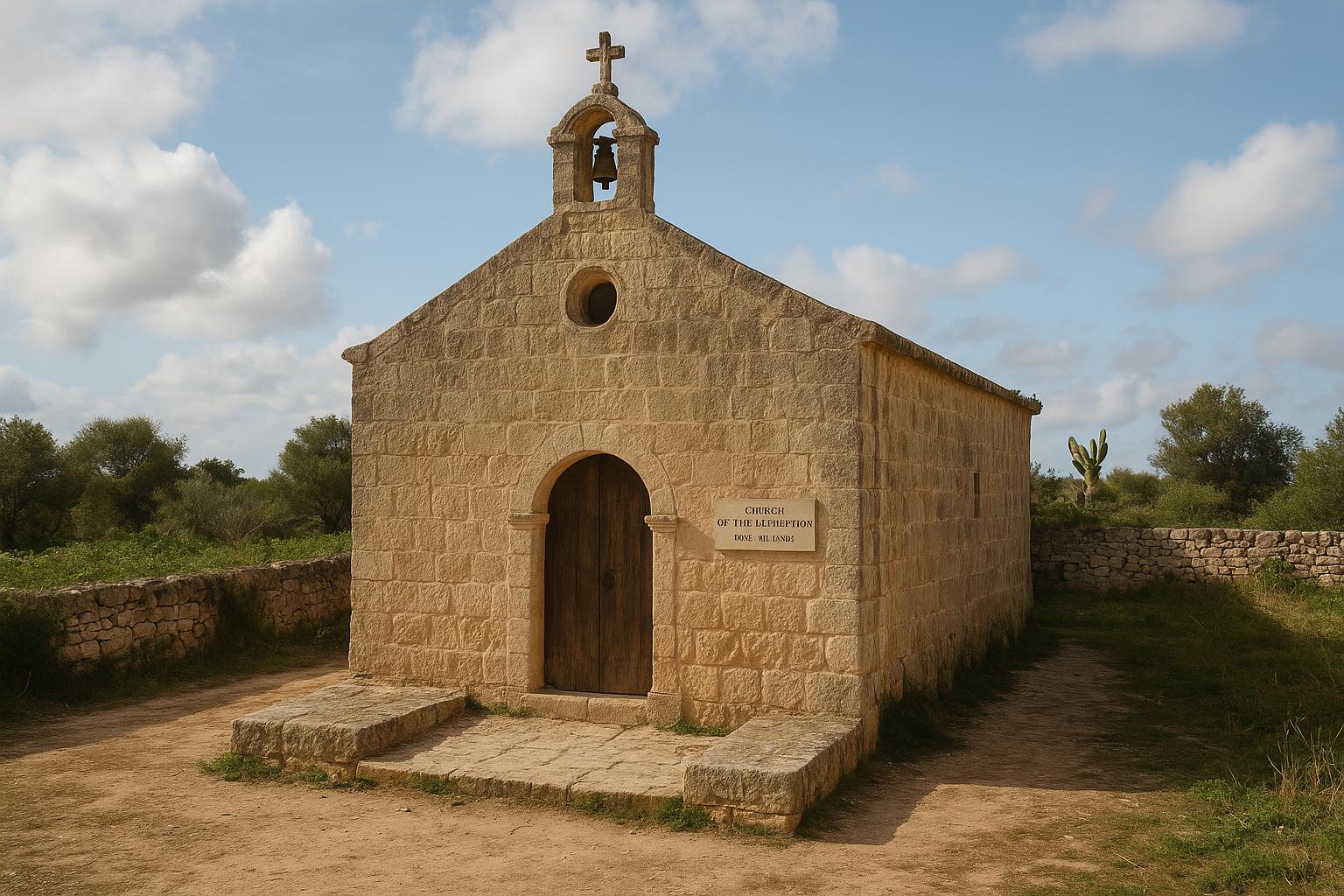
Overview of the Church of the Assumption (Ħal Millieri)
Located in the rural area of Malta known as Ħal Millieri, the Church of the Assumption stands as a significant part of the island’s rich cultural and religious heritage. This chapel, which is sometimes referred to in Maltese as “Il-Knisja tal-Assunta,” holds considerable historical importance due to its architectural design and enduring legacy within the community.
Architectural Features
The Church of the Assumption showcases traditional Maltese ecclesiastical architecture. Built primarily of native limestone, its structure exemplifies the classic medieval characteristics common in Malta. The design highlights a simple yet elegant rectangular plan that is frequently observed within the island’s religious structures. Furthermore, the chapel presents a modest façade, typifying the unembellished style of the time, with a signature pointed arch doorway welcoming visitors to its sacred interior.
The interior of the church holds much of its historical charm, retaining a number of original features that make it a focal point for historical study. One of the church’s treasured aspects is its medieval frescos, which have remarkably withstood the test of time. These artworks offer invaluable insight into the artistic practices as well as the religious iconography that prevailed during the period of the chapel’s construction. The frescos serve not only as decoration, but as historical documents that encapsulate the religious sentiment and artistic endeavors of the past centuries.
Historical Significance
The origins of the Church of the Assumption trace back to around the 15th century, marking it as one of the older surviving ecclesiastical structures on the island. Over the years, it has witnessed and survived numerous historical events, including the widespread rebuilding endeavors that unfolded subsequent to the Great Siege of Malta. This resilience adds to its historical value, encapsulating various periods of Maltese history within its walls.
Due to its age and historical importance, the Church of the Assumption has been the subject of various restoration and preservation efforts. These initiatives aim to maintain its structural integrity and aesthetic appeal, thereby ensuring that it remains a tangible link to Malta’s illustrious past. Each restoration endeavor is carefully executed to preserve the authenticity of its historical elements, allowing modern visitors to experience it as closely as possible to its original state.
Religious Practices
Despite its small size, the Church of the Assumption continues to be an active place of worship within the Ħal Millieri community. Religious practices remain an integral part of its function, reflecting centuries-old traditions that have been passed down through generations. Although services are not held regularly throughout the year, the chapel serves an important role during certain religious occasions and feast days, acting as a hub for local religious activity.
One of the most significant events in the church’s calendar is the Feast of the Assumption, celebrated annually on August 15th. This feast is of great religious importance and draws attention not only from the local community but from individuals across the island. Special services are held on this day to commemorate the event, filling the ancient chapel with an atmosphere of profound spirituality and communal gathering. This observation exemplifies the cultural and religious fervor that the church continues to inspire within its community.
Visiting the Church
For those interested in exploring the historic Church of the Assumption, it offers a unique portal into Malta’s rich past. Though regular visiting hours may not be typically available, special arrangements can often be made for individuals or groups intending to delve into its historical and architectural splendor. Visitors are encouraged to experience its tranquil ambiance and appreciate the serene environment set within the quiet countryside of Ħal Millieri.
The church’s rural setting enhances its charm, providing an opportunity for visitors to immerse themselves in the simplicity and peacefulness that characterizes the surrounding area. The quietude of the countryside allows for reflection and appreciation of the chapel not just as a historical monument but as a continuous beacon of spiritual solace.
For those seeking more detailed information about visiting guidelines, special events, or engagement in restoration activities, it is advisable to reach out to local authorities or heritage organizations involved in the site’s preservation. Maintaining open channels of communication with these bodies can provide prospective visitors with practical insights and updates regarding the accessibility and scheduling of events at the Church of the Assumption.
In conclusion, the Church of the Assumption in Ħal Millieri stands as an enduring testament to the island’s historical and religious landscape. Through ongoing preservation efforts and its continued role in religious practices, it remains a vital cultural artifact and a cherished place of worship, offering both a connection to the past and spiritual enrichment to its visitors today. Exploring such heritage sites contributes to a broader understanding of Malta’s historical narrative and the enduring legacy of its architectural marvels.