
Historical Background
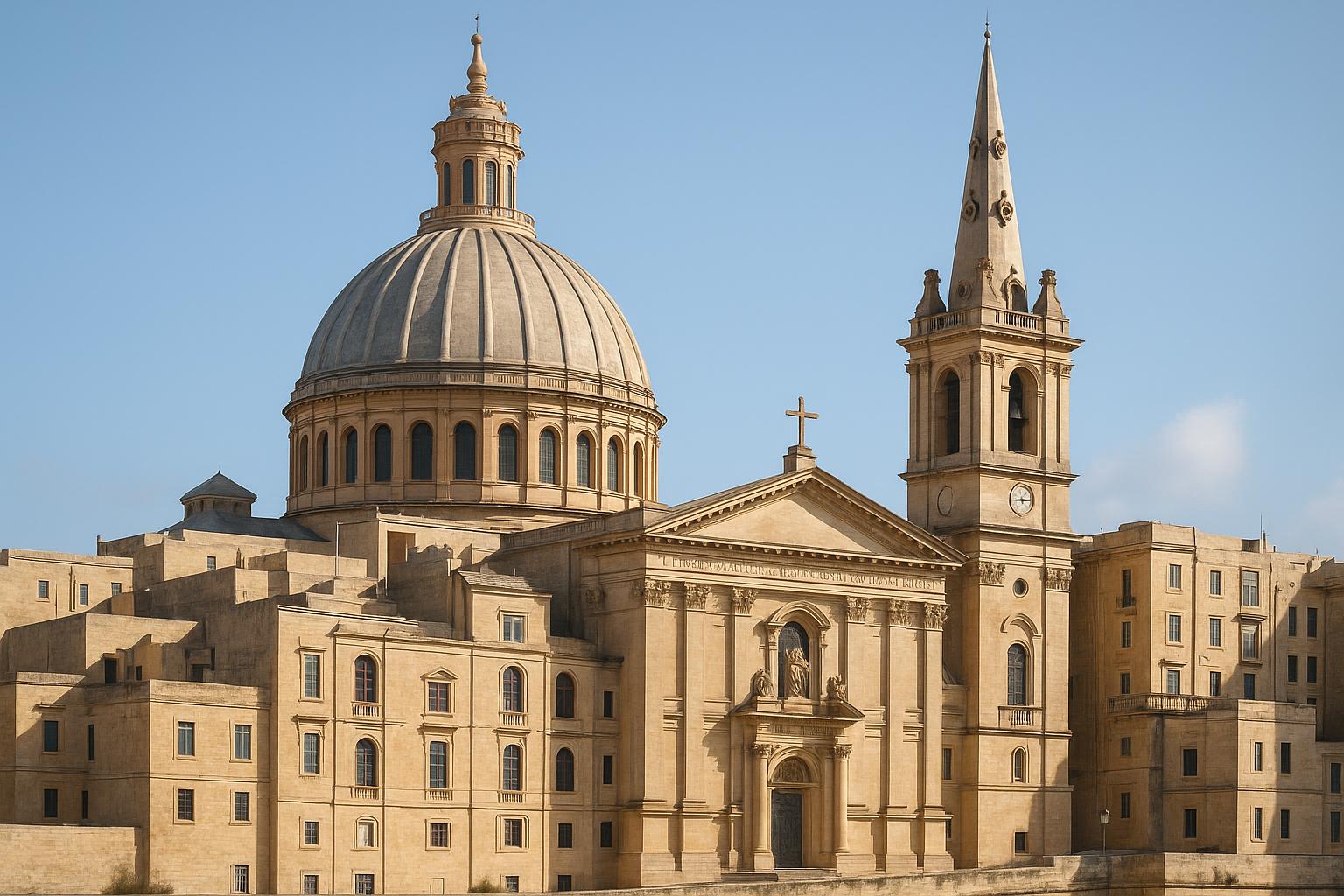
The Carmelite Church in Valletta, known in official terms as the Carmelite Basilica of Our Lady of Mount Carmel, stands as a prominent and revered landmark within the capital city of Malta. This esteemed religious edifice has a compelling history that stretches back to the late 16th century, marking an era rich in culture and construction activity on the island. The initial development of the church was concluded in the year 1573, under the auspices of the Order of the Brothers of Our Lady of Mount Carmel. This order played a significant role in bringing the spiritual legacy of Mount Carmel, a region in modern-day Israel known for its biblical associations, to Malta. The establishment of the church was part of a broader effort to reinforce Catholicism in Malta, particularly during a period characterized by religious upheavals across Europe.
The historical context within which the Carmelite Church was constructed is indicative of Malta’s strategic and cultural transformation. During the late 16th century, Malta was under the rule of the Knights of St. John, a Catholic military order. This period was marked by significant investments in building religious institutions and fortifications to safeguard the island from Ottoman invasions and exert religious influence. The church not only served as a spiritual haven for the island’s inhabitants but also as an architectural embodiment of the Catholic Church’s power and presence in the region.
Architectural Features
Architecturally, the Carmelite Church is a remarkable example of the blending of Baroque and Neoclassical styles, which together create a visually striking and harmonious architectural composition. The Baroque style is reflected in the church’s dynamic and expressive forms, characterized by dramatic use of light and shadow, as well as elaborate decorative elements. This style was predominant in many European church designs during the time, aimed at evoking emotional involvement and demonstrating the glory of the Catholic faith.
One of the most prominent and defining elements of the church’s architecture is its massive dome. Rising to an impressive height of approximately 42 meters, it is a significant feature that dominates the skyline of Valletta, offering a symbolic representation of humility reaching towards the divine. The original dome, however, did not survive the devastations of World War II, necessitating reconstruction efforts that provided an opportunity to blend historical design with contemporary elements. The new dome, completed in the 20th century, incorporates modern architectural ideas while respecting the historical essence, thus maintaining the church’s landmark status and aesthetic integrity.
Interior Design
Within the walls of the Carmelite Church, visitors will encounter an interior that is as inspirational as it is grand. The church’s interior spaces are lavishly decorated with intricate frescoes that capture biblical scenes and saintly figures, illustrating stories from the scriptures and the lives of saints. These frescoes, with their vivid colors and detailed artistry, aim to inspire the faithful and offer a visual representation of faith’s depth and richness.
Additionally, the church houses several beautiful marble altars. These altars are meticulously carved and elaborately decorated, serving as focal points for the congregation during masses and other religious ceremonies. They stand as testaments to the craftsmanship and artistic dedication prevalent during the time of their creation.
A particular centerpiece within the church is the depiction of Our Lady of Mount Carmel. This representation not only holds artistic value but also embodies the church’s spiritual dedication. Such artwork and religious iconography within the church not only enhance its visual appeal but also serve to deepen the spiritual atmosphere, instilling a sense of reverence and contemplation among visitors and worshippers alike.
Religious Significance
The Carmelite Church is more than just an architectural marvel; it is a profound religious institution that holds great significance for the local Catholic community in Malta. It is the home of the Confraternity of Our Lady of Mount Carmel, a lay association that is deeply committed to fostering and promoting devotion to the Virgin Mary. This Roman Catholic confraternity plays a vital role in the religious life on the island, organizing various activities, services, and charitable works aimed at deepening Marian devotion and assisting the community.
The church is an active center of worship, regularly hosting masses, religious ceremonies, and numerous community events. These services not only serve the spiritual needs of the locals but also attract visitors and pilgrims from different parts of the world. The church’s lively schedule of services and events provides a glimpse into the vibrant religious life of the Maltese and serves as a testament to the enduring faith and tradition comprised within the walls of this significant basilica.
Visiting the Church
For those venturing through Valletta, visiting the Carmelite Church offers a unique blend of cultural, historical, and spiritual experiences. The church’s central location in the heart of Valletta makes it easily accessible for visitors exploring the city. It also stands in proximity to other noteworthy attractions, such as the Upper Barrakka Gardens, known for their panoramic views of the Grand Harbour, and St. John’s Co-Cathedral, another architectural gem of Valletta renowned for its Baroque interiors and artistic treasures by Caravaggio and others.
Visitors who are interested in unraveling Malta’s religious and cultural tapestry, therefore, find the Carmelite Church a convenient and enlightening stop. The serene and contemplative environment of the church, combined with its historical and architectural splendor, provides a respite from the bustling activity of the city streets.
For further details on visiting the Carmelite Church and other attractions in Valletta, potential visitors can refer to the official Valletta tourism website, which offers comprehensive guides and information on various aspects of Malta’s cultural and historical offerings.
Overall, the Carmelite Church in Valletta not only underscores Malta’s rich historical lineage but also represents a significant architectural heritage. Its magnificent presence, underscored by its religious significance and historical narratives, renders it an indispensable stop for anyone intrigued by the island’s multifaceted history and enduring traditions.