
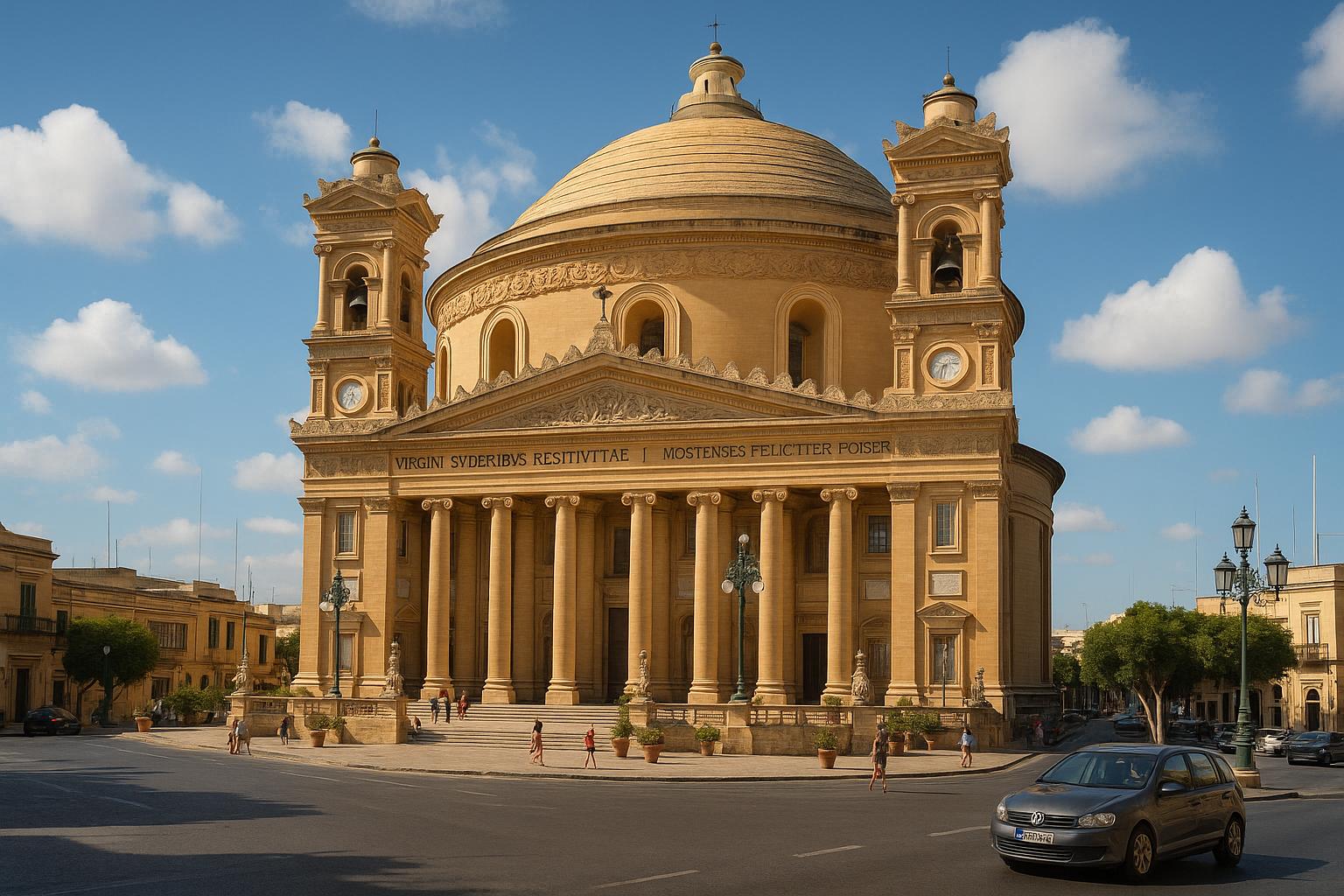
The Location and Significance of Mosta
Mosta is a town situated in the Northern Region of Malta. It is renowned primarily for its central location on the island and its prominent architectural attraction, the Rotunda of Mosta. This town has become an essential site for both residents and visitors due to its cultural and historical significance. Understanding Mosta’s significance requires a deeper look into both its geographical position within Malta and the cultural landmarks that define it.
Geographical Importance of Mosta
Mosta’s location in the heart of Malta renders it a vital hub for connecting various parts of the island. It serves as a link between the Northern and Southern regions, facilitating ease of mobility and access to other towns and regions. This strategic placement has not only made Mosta a central point for transportation but also a focal area for commerce and daily activities of the locals. Its streets are often bustling with life, reflecting a blend of historical charm and modern-day vibrancy. Despite modern developments, the layout of Mosta has retained much of its traditional Maltese character, with narrow streets and historic buildings contributing to its unique charm.
The Architectural Marvel: Mosta Dome
Another corner of Mosta’s cultural and historical prominence is the Mosta Dome, officially known as the Rotunda of Mosta. This architectural masterpiece is one of the largest unsupported domes in the world. Constructed in the mid-19th century, it reflects the community’s dedication and resilience. The church is dedicated to the Assumption of Mary and stands as a beacon of faith, showcasing art and religion intertwined in stone and space. Inspired by the Pantheon in Rome, the Rotunda of Mosta is a remarkable example of neoclassical architecture, drawing visitors not only for its spiritual significance but also for its spectacular design.
The Impressive Dimensions of the Dome
An outstanding feature of the Mosta Dome is its impressive dimensions, making it a masterpiece of architectural design. The dome boasts a diameter of 37.2 meters and an internal height of 55.2 meters. These dimensions make it not just a focal point in Mosta but also a significant structural landmark in Malta. The dome’s size and scale are awe-inspiring, considering the era in which it was built. The structural integrity achieved without modern construction equipment is a testament to the ingenuity and engineering capabilities of the period. Visitors are often struck by the sheer vastness of the space inside the dome, which feels both majestic and intimate.
Construction of the Mosta Dome
The construction of the Mosta Dome began in 1833, taking almost 28 years to complete before its grand unveiling in 1860. The architect behind this grand design was George Grognet de Vassé, a visionary who successfully executed the plans despite numerous challenges faced during the construction period. The working conditions and the technology available at the time posed significant hurdles, yet the local community overcame them with determination. Remarkably, the dome was built by the local community, with many residents donating their time and resources to see the project come to fruition. This collaborative effort not only showcases the architectural prowess of the period but also highlights the community spirit that characterized and unified the town.
Historical Events Linked to the Mosta Dome
Among the many historical events associated with the Mosta Dome, the most notable occurred during World War II. On April 9, 1942, a German bomb pierced the dome during an air raid but, miraculously, did not explode. This event is seen by many as a miraculous occurrence, which has made the Mosta Dome a symbol of resilience and divine intervention. This incident reinforced the belief in the spiritual strength of the Dome and added to its legendary status among locals and visitors alike. Today, a replica of the bomb that failed to detonate is displayed in the church, serving as a poignant reminder of this extraordinary episode in Mosta’s history.
The Mosta Dome Today
Today, the Mosta Dome is not just an important religious site, but also a center for community gatherings and cultural events. Its vast interior space often hosts concerts, cultural exhibitions, and festivals that bring in visitors from all over the island and beyond. Its acoustics make it an ideal venue for musical performances, enriching the cultural landscape of Mosta and ensuring that the dome remains a living part of the community. The lush gardens surrounding the dome provide a serene escape for contemplation and relaxation, attracting locals and tourists alike.
For those interested in exploring more about this structural wonder and the town of Mosta, various resources and guides are available. Visitors can take guided tours that offer deeper insights into its rich history and cultural significance. With the majority of such tours often conducted by locals, visitors get an intimate view of the traditions and way of life that have persisted through centuries. The Mosta Dome remains a must-see destination for anyone visiting Malta, where history, architecture, and community spirit converge in a tangible and breathtaking manner.